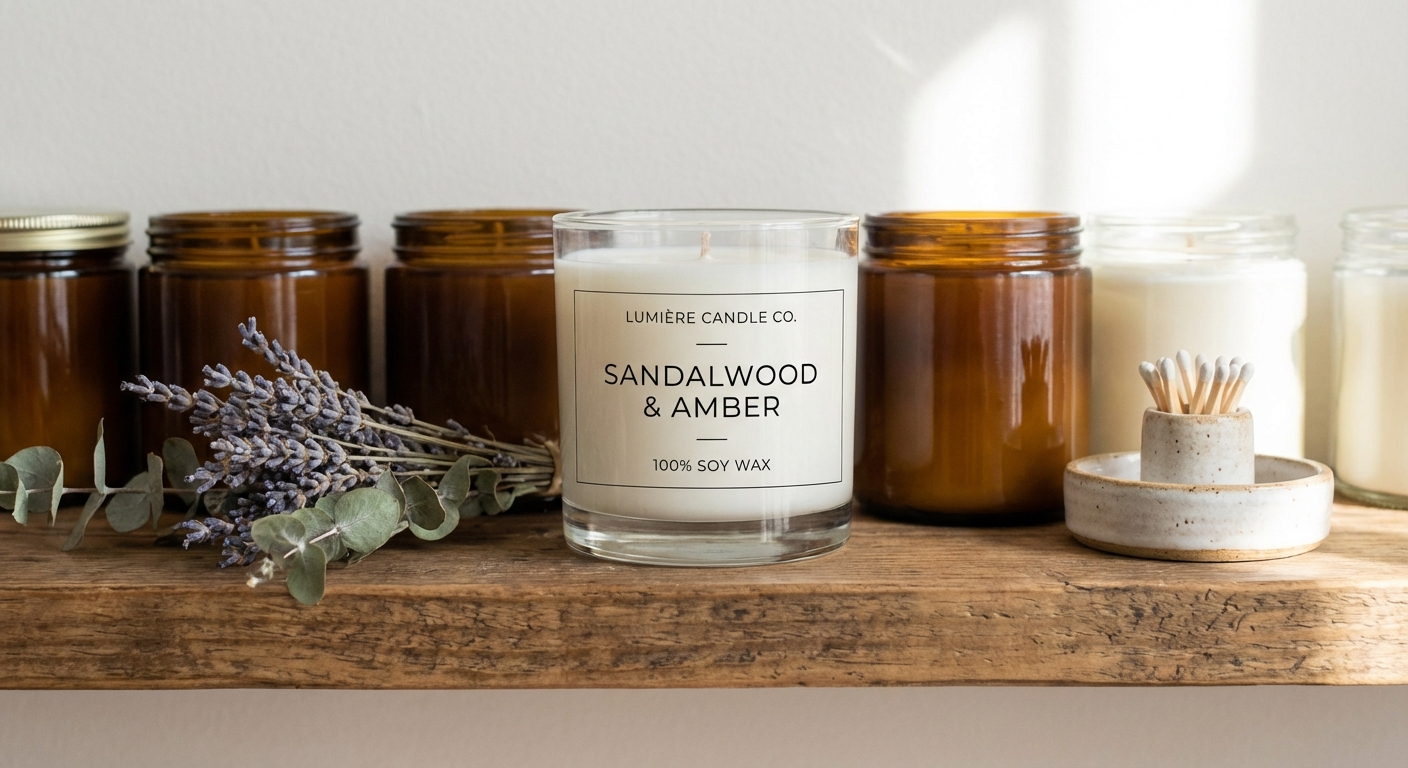
Print professional, compliant homemade food labels that meet your state's cottage food regulations
Selling baked goods, jams, or other homemade foods? Every state has specific cottage food label requirements you must meet before your products hit a farmers market table or an online storefront. This guide covers what information belongs on your labels, how requirements vary by state, and how to print food product stickers that look great and hold up to real-world handling.
Why Cottage Food Label Compliance Matters
The rules vary more than most new producers expect. California's cottage food regulations differ from Minnesota's, which differ from Texas's. Some states require very specific disclosure wording and font minimums. Others only require a basic ingredient list and producer address. Because regulations update periodically, the best practice is to download your state's current cottage food law PDF directly from your state agriculture department and keep a copy on file.
For a broader look at how labels fit into your overall product presentation, the product packaging guide covers packaging strategy from design through printing.
Common Required Elements Across Most States
Product Name: The common or usual name of the food item. 'Strawberry Jam' is sufficient in most states; you do not need a fanciful brand name, though including one is fine.
Producer Name and Address: Your full legal name and home address (or registered business address in states that allow a registered DBA). A P.O. box is not acceptable in most states because the law is designed to identify where the food was produced.
Ingredient List: All ingredients must appear in descending order by weight. If you use a compound ingredient (like chocolate chips), many states require listing the sub-ingredients as well.
Net Weight or Net Volume: Expressed in both U.S. customary and metric units in most states. For example, '8 oz (227g)'.
Allergen Declaration: Required by most states following federal FALCPA guidelines. The top nine allergens (milk, eggs, fish, shellfish, tree nuts, peanuts, wheat, soy, and sesame) must be clearly disclosed.
Cottage Food Disclosure Statement: This is the mandatory consumer advisory that the product was made in a home kitchen not subject to commercial food safety inspection. The exact required wording varies by state, and some states specify minimum font size for this statement.
Some states, including California and Minnesota, also require a 'best by' or 'use by' date. Check your state's specific cottage food regulations before finalizing your label design.
State-by-State Highlights: What Changes Most Often
Disclosure statement wording: California requires the exact phrase 'Made in a Home Kitchen' followed by specific text. Texas requires its own mandated phrasing. Minnesota has its own version. Using close-but-not-exact wording can create compliance problems at farmers markets where inspectors may check labels.
Sales channel restrictions: Some states allow cottage food sales at farmers markets and roadside stands only. Others permit online sales with direct-to-consumer shipping. A few states restrict cottage food entirely to direct, in-person transactions. Your label requirements may differ by sales channel within the same state.
Annual gross sales caps: Many states cap cottage food revenue (often between $25,000 and $75,000 annually). Once you exceed the cap, you must operate under a licensed food facility, which has different labeling requirements.
Permitted product categories: Not all homemade foods qualify as cottage food in every state. Potentially hazardous foods (items requiring refrigeration to remain safe) are excluded in most states. Permitted categories typically include baked goods, jams, jellies, candy, dried herbs, granola, and similar shelf-stable items.
Producers selling at farmers markets will also want to review how labels and packaging work together as part of a branded booth setup. The farmers market stickers guide covers how other small food producers use stickers and labels to stand out at market.
Choosing the Right Label Material for Cottage Food Products
Designing Your Cottage Food Label: Practical Tips
Cottage Food Label Formats Compared
| Format | Min Order | Best For | Material Options | Finish Options | Waterproof |
|---|---|---|---|---|---|
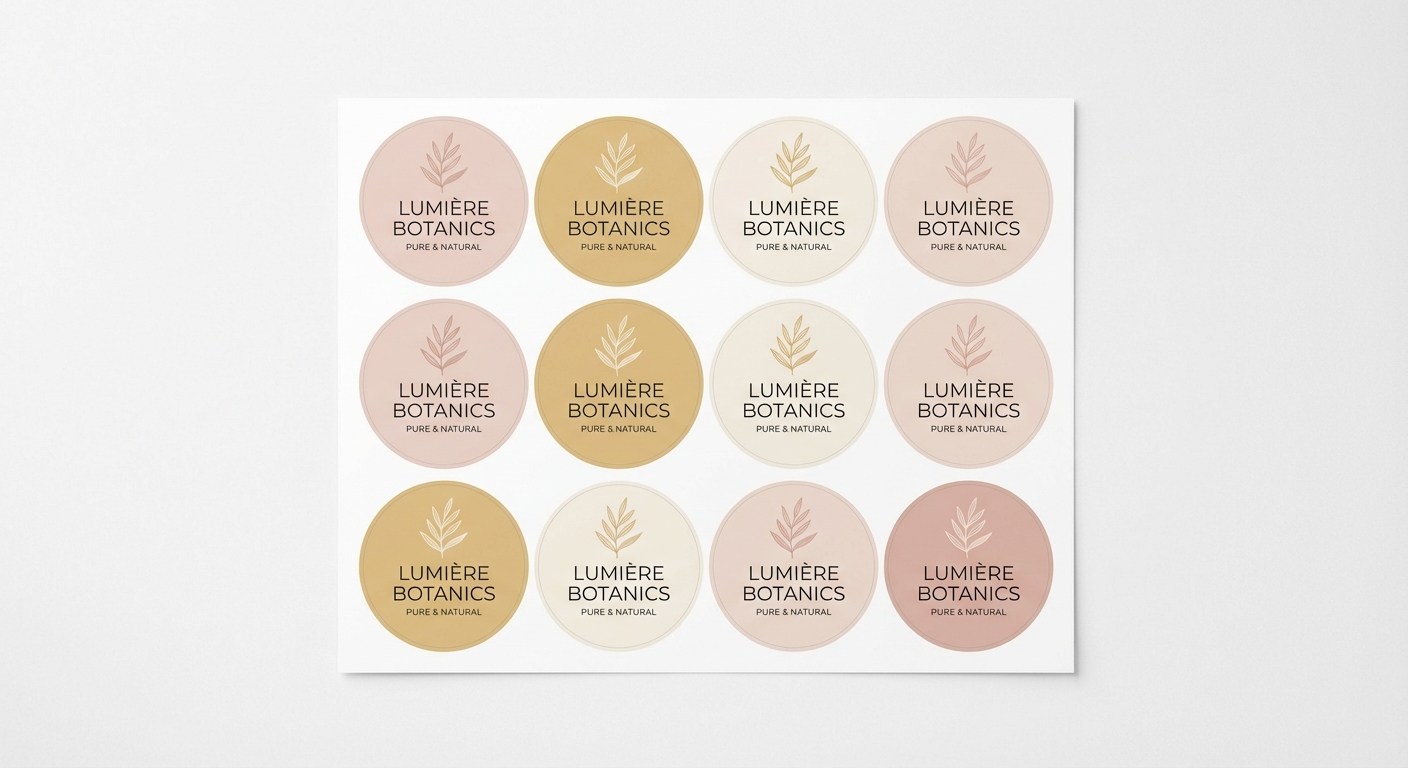
Circle Label Sheets | 5 sheets | Low volume, testing designs, variety packs | Standard Vinyl | Gloss, Matte | Yes |
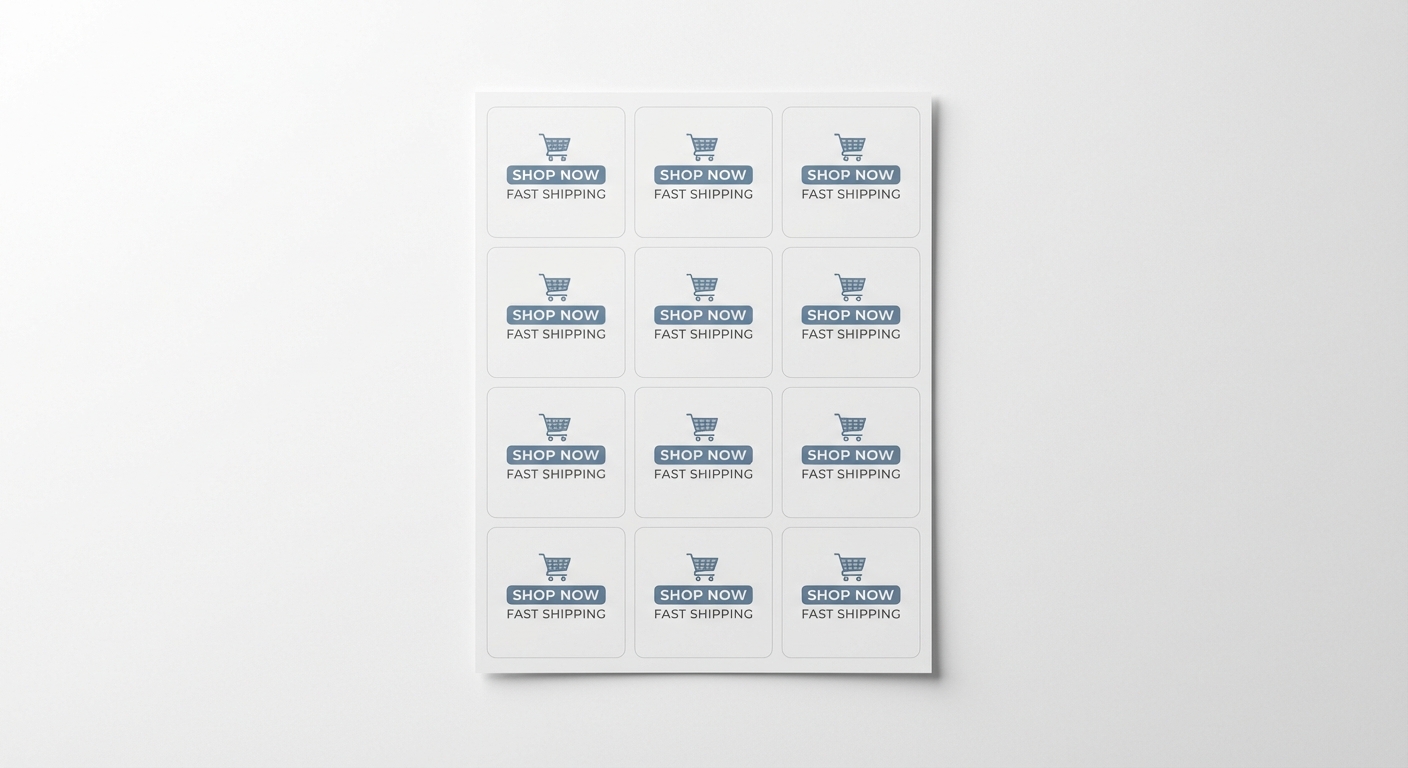
Rectangle Label Sheets | 5 sheets | Jam jars, bakery boxes, bread bags | Standard Vinyl | Gloss, Matte | Yes |
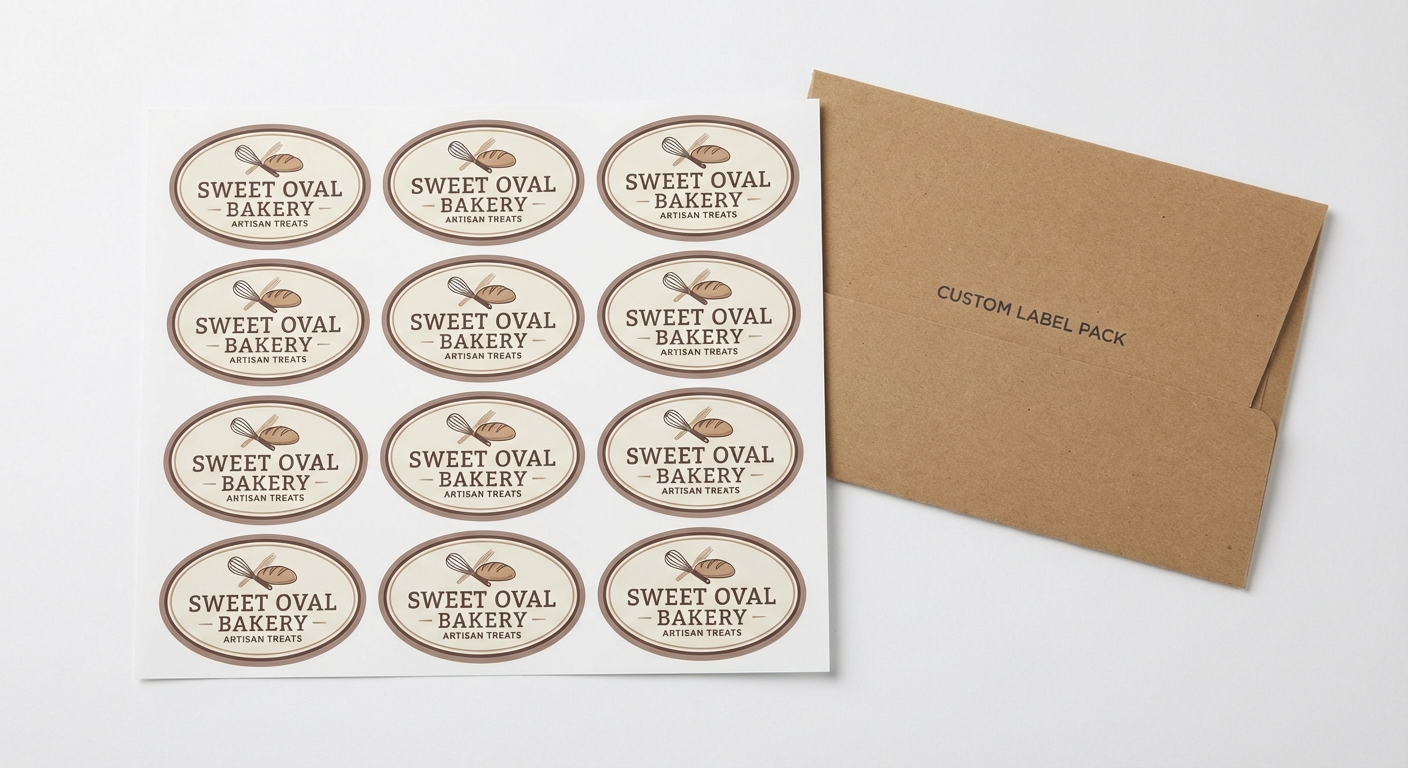
Oval Label Sheets | 5 sheets | Artisan jars, candles, sauces | Standard Vinyl | Gloss, Matte | Yes |
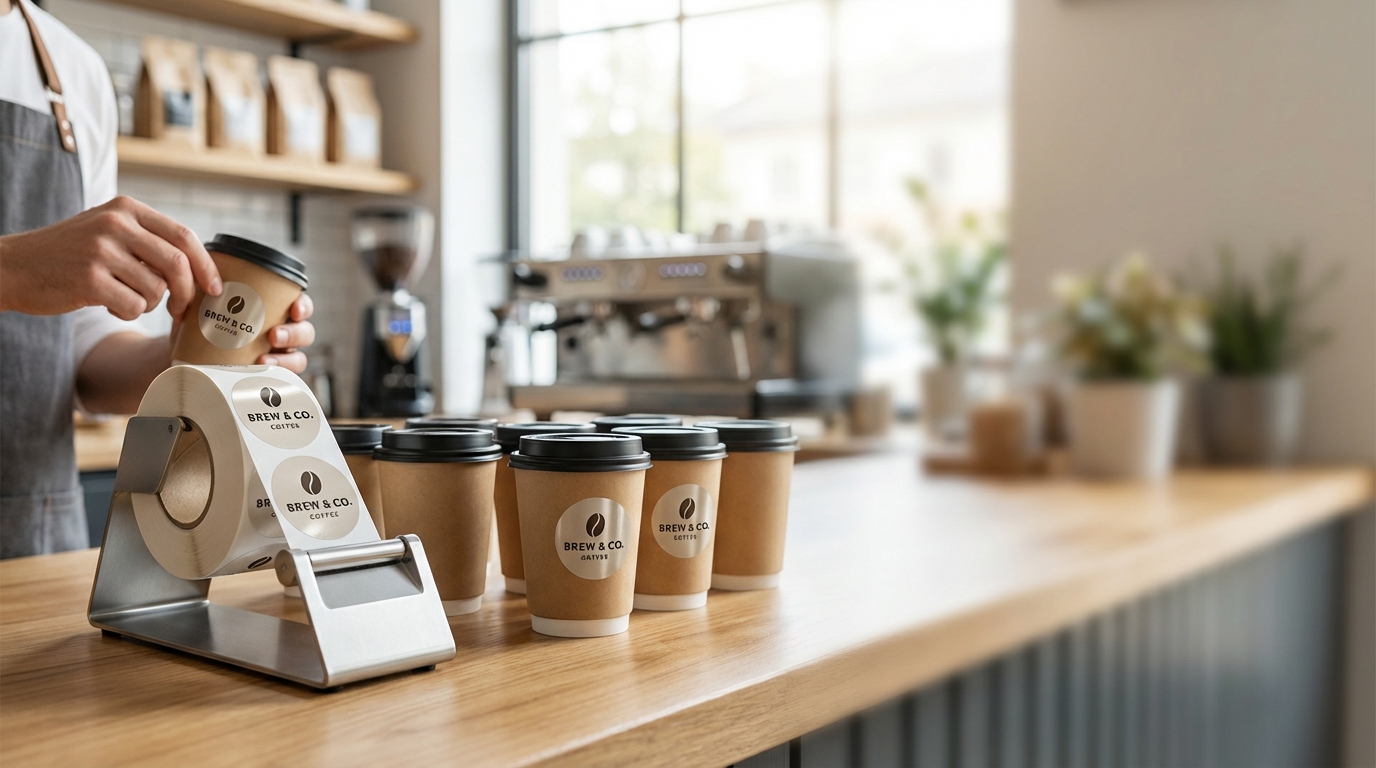
Circle Paper Roll Labels | 500 units | High-volume jar lids, dry goods, bakery | White Gloss, White Matte | Gloss, Matte | No |
Circle Waterproof Roll Labels | 500 units | Refrigerated jams, sauces, beverages | Waterproof Vinyl | Gloss, Matte | Yes |
Oval Waterproof Roll Labels | 500 units | Sauce bottles, salad dressings, honey jars | Waterproof Vinyl | Gloss, Matte | Yes |
Die-Cut Labels | 100 units | Custom shapes, branded product labels | Standard Vinyl | Gloss, Matte | Yes |
Cottage Food Label Requirements: What Buyers Need to Know
- What are the 5 requirements of a food label?
- Most states require cottage food labels to include: (1) the product name, (2) the name and address of the cottage food producer, (3) a net weight or volume statement, (4) a list of ingredients in descending order by weight, and (5) a cottage food disclosure statement such as 'Made in a Home Kitchen Not Inspected by the State Department of Agriculture.' Some states add allergen declarations or a 'best by' date as mandatory sixth and seventh items. Always check your specific state's cottage food law because exact wording requirements vary.
- What is required on a cottage food label in Texas?
- Texas requires cottage food labels to include the producer's full name and home address, the product name, all ingredients listed in descending order by predominance, the net weight or net volume, any major food allergens (as defined by federal law), and the statement 'MADE IN A HOME KITCHEN — NOT INSPECTED BY THE DEPARTMENT OF STATE HEALTH SERVICES OR A LOCAL HEALTH DEPARTMENT.' Texas does not currently require a nutrition facts panel for cottage food producers operating under the Texas Cottage Food Law.
- How do I create a cottage food label?
- Start by listing every required element your state mandates. Then design your label using free tools like Canva or Adobe Express, or hire a graphic designer. Your label file should be at minimum 300 DPI for sharp print quality. Print on a material that suits your product: waterproof vinyl labels are best for products that may get refrigerated or handled with wet hands, while paper labels work well for dry bakery items sold at farmers markets. Order a small quantity first to verify fit and legibility before committing to a large print run.
- What is the cottage food law in Pennsylvania?
- Pennsylvania's Cottage Food Law allows producers to sell certain non-potentially-hazardous foods directly to consumers from their home, at farmers markets, at roadside stands, and at community events. Products must be labeled with the producer's name and home address, the product name, all ingredients, net weight or volume, and the statement 'NOT FOR RESALE — PROCESSED AND PREPARED WITHOUT STATE INSPECTION.' Annual gross sales caps and permitted product categories are defined by the PA Department of Agriculture, so producers should verify current rules directly with the state.
- What label material should I use for cottage food products?
- For most cottage food items, waterproof vinyl roll labels are the most durable choice. They resist condensation, refrigerator moisture, and handling without peeling or smearing. Baked goods and dry goods sold at farmers markets can use standard paper labels, but waterproof vinyl is the safer long-term investment. Both gloss and matte finishes are available, and matte gives a more artisan, handcrafted look that many cottage food brands prefer.
- What label sizes work best for cottage food packaging?
- Label size depends on your container. Common starting points are 2x2 inch square or circle labels for jar lids, 2x3 inch or 3x2 inch rectangles for jar sides, and 4x2 inch or larger for bread bags and bakery boxes. Circle labels sized 2 to 4 inches are popular for jams and honey. The most important rule: every required text element must be clearly legible at your chosen size, so test a proof before ordering in bulk.
- How many labels should I order, and what does bulk pricing look like?
- Label sheets start at a minimum order of 5 sheets, making them ideal for testing a design. Roll labels start at 500 units, which suits producers who sell regularly at farmers markets or through online channels. Per-unit cost drops significantly at higher quantities, with the biggest price breaks typically appearing at 500, 1,000, and 2,500+ units. Ordering in bulk saves money per label and reduces the frequency of reorders during a busy season.