The real reasons vinyl stickers peel, lift, or refuse to bond, and how to pick a material that actually holds.
If your stickers are curling at the edges, sliding off water bottles, or falling off a laptop within a week, the adhesive is usually the culprit, not bad luck. Sticker adhesion problems almost always trace back to one of three things: a low-quality adhesive backing, a surface the adhesive was never designed for, or an application mistake. At Stickers.com, every sticker is custom printed and cut per order using vinyl material and adhesive backing built for the surface you're applying it to, whether that's a laptop, a car bumper, packaging, or an outdoor sign. This guide walks through why stickers stop sticking and how to choose a material that stays put for years instead of weeks.
Top Reasons Your Stickers Won't Stick
Dirty or oily surfaces. Fingerprints, dust, condensation, and residual soap film all sit between the adhesive and the surface, preventing a real bond. This is the single most common reason people report stickers falling off water bottles and laptops.
Low surface energy materials. Plastic, silicone, and some powder-coated metals resist adhesion because they don't let glue 'grip' the surface the way glass or painted metal does. This is why plastic tumblers and certain phone cases are notorious for rejecting stickers, and why Cricut users searching for fixes online usually end up needing a stronger commercial-grade adhesive rather than a printer-and-cut-vinyl combo meant for smooth surfaces.
Wrong material for the environment. A sticker rated for indoor novelty use, like Economy Vinyl, isn't built to survive rain, direct sun, or repeated washing. If it's going outside, on a car, or on something that gets handled roughly, it needs UV and moisture-resistant lamination.
Cold or humid application conditions. Adhesive is temperature sensitive. Applying a sticker below 50°F or in high humidity keeps the glue from setting properly, which shows up later as lifting corners and bubbling.
Curved or textured surfaces. Flat, rigid vinyl doesn't conform well to a curved helmet, contoured bumper, or ridged equipment case. Without air release channels built into the material, trapped air pushes the edges up over time.
Choosing the Right Adhesive Backing and Material
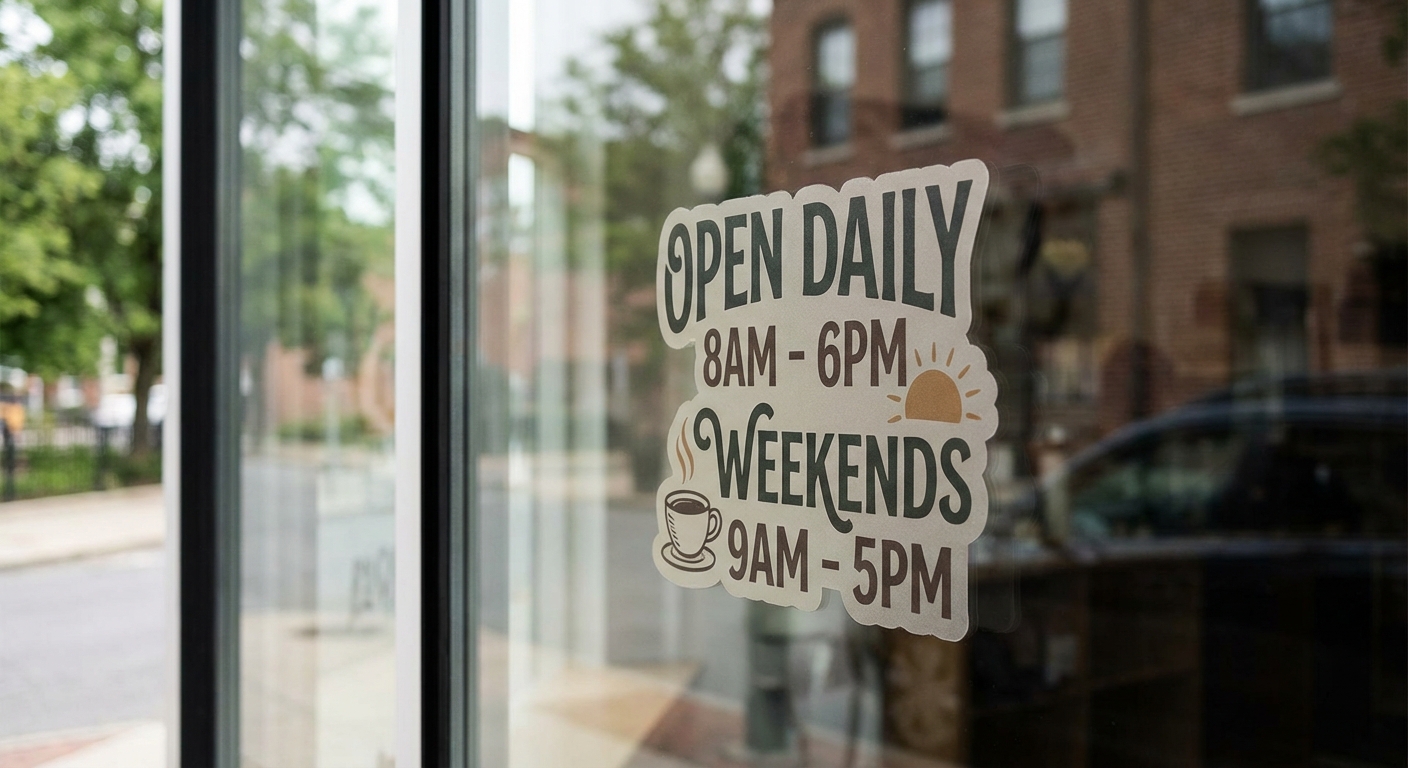
For glass applications like storefronts or car windows, standard face-adhesive vinyl isn't the right call. Front-Adhesive Stickers are designed to stick to the inside of the glass with the print facing out, which protects the graphic from weather and prevents the peeling that happens when an outward-facing adhesive fights against sun exposure and window cleaning. If you're specifically outfitting vehicle glass, our car window stickers guide covers placement and material choice in more detail.
Cut style matters too. Kiss-cut sheets leave a backing liner in place and are great for sheets of small designs, but full die-cut stickers seal the entire adhesive edge, which reduces the lifting and curling that happens at exposed seams. Our breakdown of what kiss-cut stickers are explains when each cut style makes sense.
Application Mistakes That Cause Peeling Later
Sticker Material Comparison: Which Adhesive Holds Up Best?
| Material | Adhesive & Lamination | Outdoor Lifespan | Best Surface | Best For |
|---|---|---|---|---|
Economy Vinyl | Standard adhesive, clear UV-fade protective layer | 3-5 years with proper care | Smooth indoor surfaces | Laptops, water bottles, novelty items |
Standard Vinyl | UV, scratch, and moisture-resistant lamination with air release | 3-5 years outdoor | Cars, outdoor signage | Outdoor signs, car stickers |
Premium Vinyl | Toughest adhesive available, UV/scratch/moisture lamination, air release | Up to 8 years outdoor | Curved, textured, marine-grade surfaces | Trucks, marine applications, contoured equipment |
Sticker Adhesion Questions Answered
- How do I fix stickers that won't stick?
- Start by cleaning the surface with isopropyl alcohol to remove oils, dust, and residue, since adhesive can't bond to a dirty or oily surface no matter how strong it is. Warm the sticker and surface to room temperature (adhesive gets stiff and less tacky below 50°F), press firmly from the center outward with a card or squeegee to force out air bubbles, and hold pressure on the edges for a few seconds. If the sticker is already worn out or was printed on thin economy paper stock, the fix isn't more pressure, it's ordering a replacement in a proper adhesive vinyl like the Custom Vinyl Stickers.
- What adhesive will make stickers sticky again?
- A repositionable craft spray adhesive applied to the back of an existing sticker can buy you a temporary fix, but it rarely lasts outdoors or on flexed surfaces like bumpers or bottles. For anything you want to keep long-term, it's more reliable to reorder the design on Standard or Premium Vinyl, which ship with permanent adhesive and UV, scratch, and moisture-protective lamination already built in rather than relying on a second glue layer.
- What can I put on a sticker to make it stick better on plastic?
- Plastic, especially textured plastic like tumblers, phone cases, and vehicle interiors, have low surface energy. Wipe the plastic with isopropyl alcohol (not soap and water, which can leave a film), let it dry completely, and apply the sticker slowly while pressing out air pockets. For curved or textured plastic, Premium Vinyl with air release technology conforms better than economy-grade material and holds up to 8 years outdoors.
- How do I get stickers to stick permanently?
- Permanent adhesion comes down to matching material to surface. Economy Vinyl is fine for smooth indoor surfaces like laptops and water bottles but isn't rated for weather. Standard Vinyl and Premium Vinyl both include UV, scratch, and moisture-resistant lamination for outdoor use, with Premium rated up to 8 years and best suited for cars, trucks, marine equipment, and contoured surfaces. Choosing the right material at checkout matters more than any at-home fix once a sticker is already peeling.
- Why are my stickers peeling at the corners even though I pressed them down?
- Corner lift usually means one of three things: the surface wasn't fully clean, the sticker was applied in cold or humid conditions before the adhesive could set, or the material itself isn't durable enough for the surface (thin paper-based stickers on rough or flexing surfaces almost always lift first). Die-cut stickers with a full adhesive backing tend to resist corner lift better than kiss-cut sheets because the entire shape is sealed edge to edge. For a full walkthrough of proper technique, see our guide on how to install a sticker.
- How fast can I get replacement stickers if the ones I have keep failing?
- Standard production runs 3 business days before your order ships via FedEx or UPS, with faster Rush and Express production options available if you need them sooner. That means you can reorder in a better material, like Standard or Premium Vinyl, and have a fresh, correctly-matched batch on your doorstep within days rather than weeks.